During the Second World War 1939-1945, overseas surveying and mapping consisted of topographic survey, map reproduction and mensuration of aerial photography. Unlike in the First World War were the British Royal Engineers provided much of the geographic support for the Canadian Expeditionary Force (CEF), during the Second World War the Royal Canadian Engineers would provide geographic support for the Canadian Army.
Phantom’s role was to provide early information on the progress of the battle, and on other matters of immediate importance, primarily for the higher command holding reserves capable of influencing military operations also for other commands directly concerned in the conduct of the ongoing operations. Phantom had no duties in the field other than the collection, passage and dissemination of information. In the battle information was obtained by liaison, intercept (J) or personal reconnaissance.
We would like to welcome the many new subscribers to Project ’44 and remind you that you can also follow us on Twitter, Facebook and Instagram to have up to date sit-reps on the project.
For those of you who are just joining us, Project ’44 began over a year ago with a mission of mapping out the First Canadian Army on its Battle through Normandy.
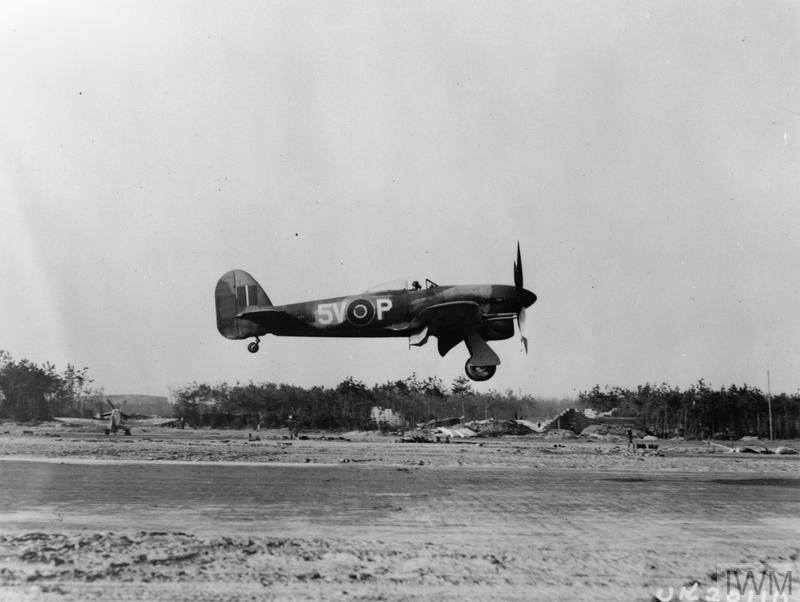
At 2045 hours on 7 July 1944 nine Hawker Typhoon IBs flown by Canadians in 439 “Sabre-Tooth Tiger” Squadron RCAF took off from B5 airfield near Le Fresne-Camilly. It was a short seven kilometres to their target, the village of Buron, which had been a feature of 3rd Canadian Infantry Division’s frontline for a month.
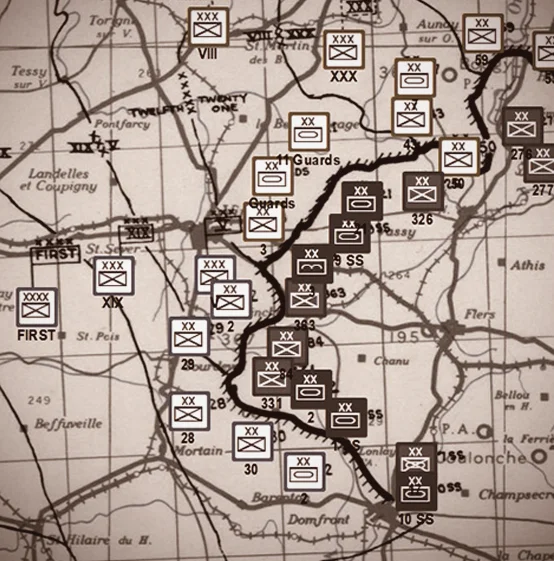
How well do you know the Battle of Normandy? If you read about places like Authie, Buron, or St. Lambert-sur-Dives, would you know where they were without a map? Would you know what operations took place in those towns or which Canadian units fought there?